
Editorial review as of October 19, 2026. Sources cited in the article were verified against their linked origin, and the figures below were re-checked on this date.
One of the most invisible categories in modern household spending is tips and small service charges. The line on the receipt that converts a $42 dinner into a $55 dinner. The 18 percent service charge automatically added to a takeout order. The five-dollar tip on a coffee delivery that took ten minutes. The fifteen percent tip prompt on a screen at a counter where no actual service occurred.
These charges are individually small and habitually unrecorded. Across a month, they typically total $80 to $250 for a household that eats out, orders in, or uses service businesses regularly. Across a year, this is $1,000 to $3,000 of largely invisible spending.
The fix is not to stop tipping. It is to track the tips so they become visible, allowing conscious decisions about how much to tip and how often to use services that involve tipping.
Why tips are invisible
Tips are invisible because they are bundled with the underlying transaction. A $13 tip on a $76 dinner appears on the statement as $89 total. The tip is technically there but mentally absorbed into the cost of dinner. The household tracks dinner; the tip is implicit.
Service charges are similarly bundled. Most delivery apps now charge a service fee, a delivery fee, and a tip on top of the food cost. The receipt shows a single total. Unless you scroll into the order details, the breakdown is hidden.
This invisibility is convenient for many parties: the restaurants, the apps, the service providers. It is less convenient for households trying to understand where their money actually goes.
The simple breakdown approach
The simplest way to track tips and service fees is to break down each receipt at the moment of entry. When you log a $89 dinner in your tracking system, log it as two lines: $76 for the meal, $13 for the tip. When you log a $48 delivery order, log the food, delivery fee, service fee, and tip as separate lines if your system allows, or at minimum as a single line with a note showing the breakdown.
This breakdown approach gives you per-category visibility into how much of your eating-out total is actually food versus service. The proportion is often surprising. A household that thinks it spends $400 a month on dinners often discovers that $80 to $120 of that is actually tips and service fees.
The dedicated tip category
If breaking down each receipt is too much effort, a simpler alternative is a single dedicated category called “tips” or “service fees.” Every tip and service charge gets aggregated into this one category. The monthly total becomes visible without requiring transaction-by-transaction breakdown.
This approach loses per-meal detail but gains a cleaner view of total tipping and service-fee spending. For households who want awareness without granular tracking, the single-category approach is usually enough.
The delivery fee specifically
Food delivery apps have introduced a particularly aggressive pattern of fee stacking. A typical delivery order can include:
- The food cost (sometimes higher than the in-restaurant price)
- A delivery fee ($2 to $8)
- A service fee (10 to 15 percent of the order)
- A small order fee (if the order is below a threshold)
- A tip (with the app defaulting to 15 to 20 percent)
- Sales tax
The total can easily run thirty to fifty percent above the restaurant price for the same food. Tracking delivery orders as their own subcategory, separate from regular dining out, often reveals the magnitude of this premium and prompts a shift toward pickup orders or in-person dining.
The “tap to tip” prompt trap
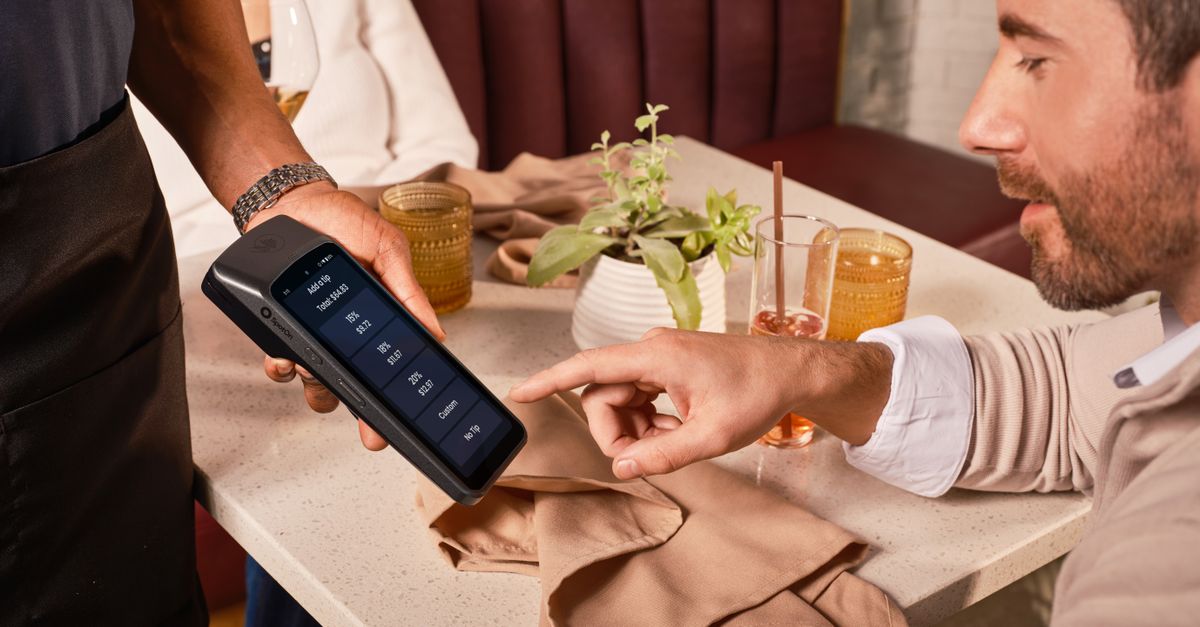
One of the newer patterns in retail is the tip prompt at counter-service businesses where no actual table service occurs. Coffee shops, takeaway windows, bakery counters, and similar businesses present a tip screen with default options of 15, 20, and 25 percent.
The defaults are designed to take advantage of decision fatigue at the point of payment. Many customers tap a default without much thought, adding $1 to $3 to each transaction. Across a month of regular small purchases, this can be $30 to $80 in tips for service that, historically, did not include tipping.
Tracking these tips as a separate line within your “tips” category often reveals the pattern. Once visible, most households make a conscious decision about whether to continue the default tipping or to shift to selective tipping based on the actual service received.
The ride-share tipping pattern
Ride-share apps follow a similar pattern, with default tip options of 15, 20, and 25 percent presented at the end of each ride. Default-tipping each ride at 20 percent adds meaningfully to monthly transport spending.
This is not an argument against tipping ride-share drivers. Many drivers depend on tips for their actual income. The argument is for conscious tipping rather than default tipping, so the cumulative monthly total is a deliberate choice rather than a passive accumulation.
The “service quality” reflection
One useful exercise that emerges from tip tracking is reflecting on whether your tipping level matches the actual service quality. Many households default to a single tip percentage regardless of service. The default is convenient but disconnected from the actual experience.
Households that begin reflecting on the connection between service and tip often shift their pattern slightly: higher tips for excellent service, lower tips for poor service, and minimal tips for situations where no real service occurred. The total monthly tipping often stays similar but feels more aligned with actual experience.
The cultural and ethical context
It is worth being honest about the cultural and ethical context of tipping. In many service industries, particularly restaurants and ride-share, workers depend on tips for their actual income. The argument for tracking tips is not an argument for tipping less in those contexts. It is an argument for awareness.
Some households respond to tip tracking by deciding to tip more in contexts where the worker depends on it (sit-down restaurants, hair salons, ride-share) and less in contexts where the worker does not (counter-service businesses). Others maintain their tipping levels but become more deliberate about when to use services that involve tipping in the first place.
The right answer is personal. The point of tracking is to make the answer conscious rather than habitual.
The honest summary
Tips and service fees are real money. For households that use service businesses regularly, the annual total can rival entire other budget categories. Bringing this category into the tracking system, even at the simplest single-category level, transforms it from invisible to visible. The decisions that follow are personal, but the awareness is the necessary foundation.
For pairings, see our pieces on cash tracking and finding money leaks.
Sources this article draws on
Figures and definitions on this page reference the following authoritative sources for the Expense Tracking category. Where a specific number is quoted, the corresponding source is the one it was checked against.