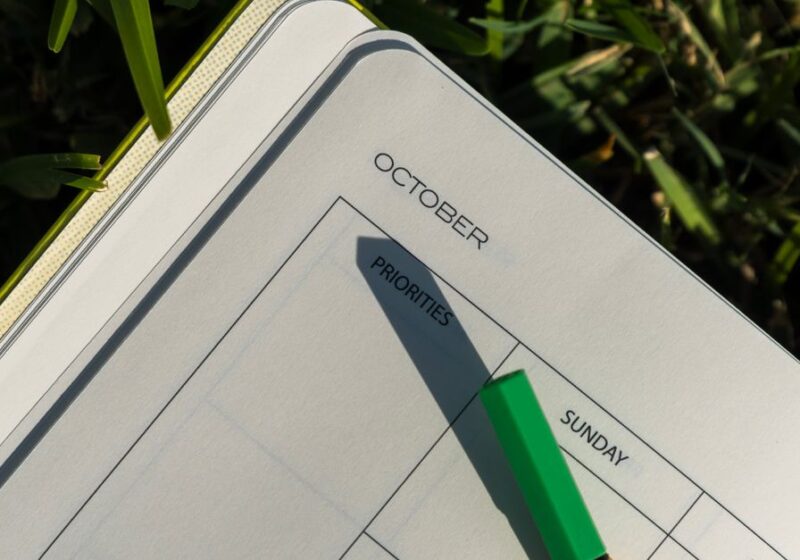

Editorial review as of October 19, 2026. Sources cited in the article were verified against their linked origin, and the figures below were re-checked on this date.
If we had to point to a single habit that quietly keeps household finances calm, it would not be a spreadsheet, an app, or a particular budget method. It would be a small, predictable Sunday ritual that takes about twenty minutes a week and gives you a clear picture of the seven days ahead. Households that hold this habit rarely have financial surprises. Households that skip it tend to feel slightly out of control even when their numbers are fine.
The ritual is deliberately small. It is not a sweeping monthly review. It is not a deep analysis. It is a short cadence that lives in the easy part of your weekend, like making coffee or folding laundry. Over months and years, it becomes the structural rhythm underneath everything else you do with money.
Why Sunday, specifically
Sunday works because it sits between the week that just ended and the week about to begin. By Sunday morning, the last weeks bank transactions have settled. By Sunday evening, the upcoming weeks bills, gigs, deliveries, and social plans are usually visible. This is the natural seam for a check-in.
Some households prefer a different evening: Wednesday after dinner, or a quiet Friday morning. The day matters less than the consistency. What matters is that the check-in happens at the same point in the week, every week, in a setting that already has your attention.
The four steps that take twenty minutes
The ritual has four parts, in order, and each takes about five minutes. You can do all four with a phone, a paper notebook, or a quick laptop session, depending on how you track.
Step one: look at the past week
Open your main checking account. Scroll through the last seven days of transactions. You are not trying to categorize each one. You are just looking. The point is to notice what happened. Was there a charge you forgot about? A small leak that has been recurring? A larger purchase you want to think about? A subscription that auto-renewed without warning?
This step alone catches an extraordinary number of small problems before they become big ones. Quiet duplicate charges. Forgotten free trials that started billing. Small fraud. None of these usually appear on a monthly summary. They appear on a weekly scroll.
Step two: scan the next seven days
Pull up your calendar and your usual list of recurring bills. What is coming up? A birthday that needs a gift? A bill that hits midweek? A doctor visit that will have a co-pay? A dinner out you already agreed to? An automatic payment from your insurance?
Write the next seven days expected outflows on a single line. You do not need to be precise. You need a number you trust. This is how you avoid the surprise of money disappearing on a Tuesday when you were not expecting it.
Step three: confirm the cushion
Compare what is in your checking account today with what you expect to spend in the next seven days. Add a small margin for surprises. If the cushion looks healthy, the ritual is essentially done. If the cushion looks tight, you have a quiet moment to plan how to bridge it, with all the gentle options still available: shifting a non-urgent purchase, pulling a small amount from savings, postponing a discretionary expense.
The cushion is everything. A household with a calm cushion experiences money as a quiet utility. A household without one experiences money as a daily emotion. The ritual is the practice that keeps the cushion in view.
Step four: write down the one thing
The last five minutes of the ritual is for a single sentence. Pick one thing you noticed during the scroll, the scan, or the cushion check. Write it down. It might be “We are buying too many small things on weeknights.” It might be “The grocery bill spiked last week, look into it.” It might be “We are doing well and the savings drip is working.”
This is not a journal. It is a one-sentence note to your future self. Reading back through these sentences after a few months is often the single most useful month-on-month review a household can do, because it captures patterns no spreadsheet will show you.
What the ritual quietly does
The Sunday ritual does several things at once, and most of them are invisible week-to-week.
It catches small leaks early. Subscription that crept up by three dollars. Auto-pay you forgot you set. A change in a utility rate. A new fee on an account. None of these are catastrophic individually, but they are the easiest to fix in the first week and the hardest to claw back after six months.
It prevents the surprise factor. Most household money stress is not about the amount of money. It is about the surprises. The bill you did not know was coming. The auto-renewal you forgot about. The dinner out that suddenly took the week sideways. The weekly scan removes nearly all of these surprises by giving you a small advance look at the days ahead.
It builds a quiet familiarity with your own numbers. After three or four months of the ritual, you stop needing the spreadsheet to know roughly where you are. You can feel it. You know what a normal grocery week looks like, what a normal utility bill looks like, what a normal weekend looks like. That intuition is the real outcome.
What the ritual is not
The ritual is not a monthly review. The monthly review still exists, usually on the first Sunday of the new month, and it covers the bigger questions: did the budget hold, do any structural numbers need to change, did anything unexpected happen worth noting. The monthly review takes thirty to forty-five minutes. The weekly ritual is much smaller, and it is the more important of the two.
The ritual is also not a planning session. You are not building anything new on a Sunday. You are checking, scanning, confirming, and noticing. Planning happens at the monthly review or whenever life requires it. The weekly cadence is meant to be quiet, fast, and almost automatic.
Building the habit when you have never had it
The first three Sundays are usually the hardest. The ritual feels artificial. The cushion check feels redundant. The one-sentence note feels silly. By the fourth or fifth week, the pattern starts to settle. By the eighth or ninth week, most households cannot remember how they functioned without it.
If you are starting fresh, set a recurring twenty-minute calendar block at a quiet point in your Sunday. Pair it with something you already enjoy. Many households we have spoken to do the ritual with morning coffee. A few do it after dinner with a glass of wine. One reader does it on a long Sunday walk by listening to a recording of her own voice reviewing her transactions. Whatever works.
For the wider context, see our pieces on the 50/30/20 rule and the first budget that survives the second month, both of which are easier to maintain when the Sunday ritual is in place.
Sources this article draws on
Figures and definitions on this page reference the following authoritative sources for the Budgeting Basics category. Where a specific number is quoted, the corresponding source is the one it was checked against.